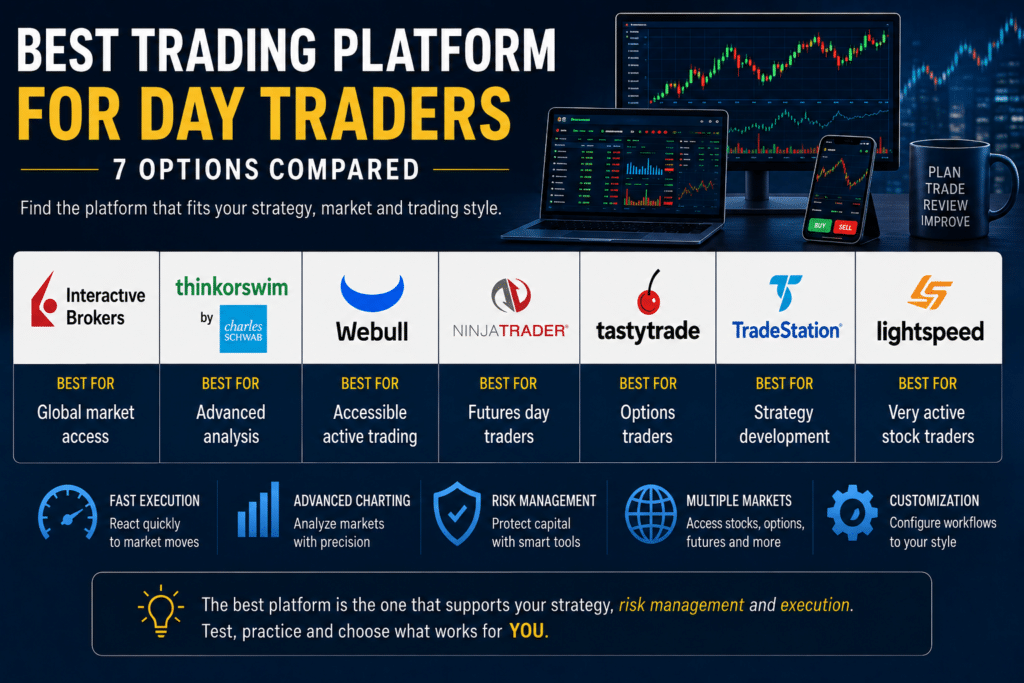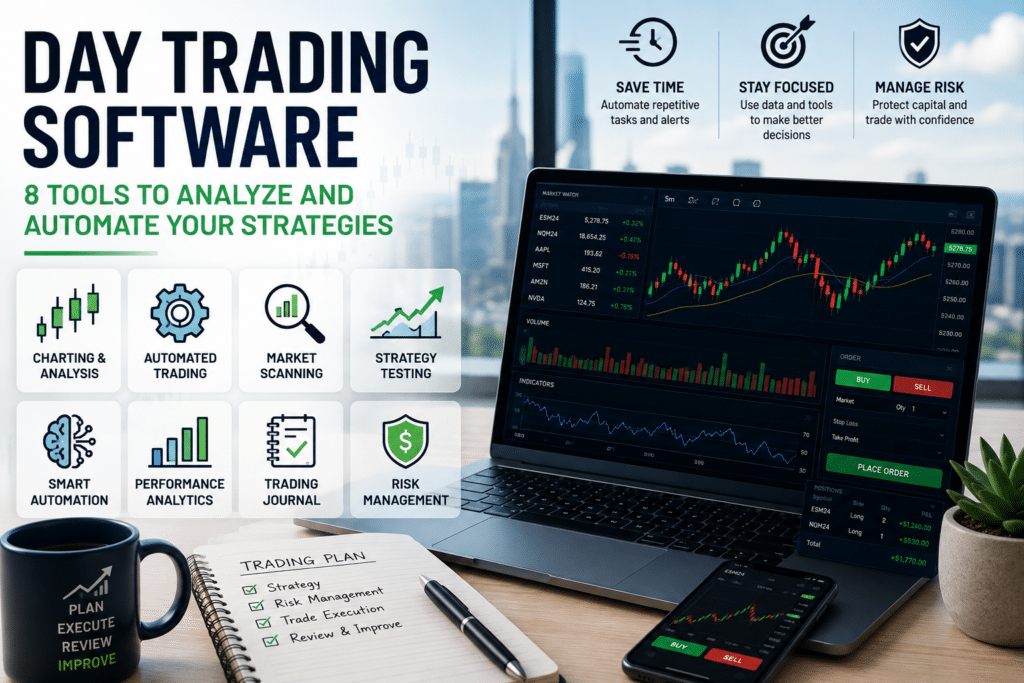

AI Trading Tools are becoming an increasingly important part of modern trading. Thanks to artificial intelligence, market analysis platforms, and SaaS (Software as a Service) solutions, traders now have access to software capable of processing large amounts of market data, automating repetitive tasks, and supporting faster decision-making.
However, using AI Trading Tools does not automatically lead to better trading results. Technology should support the trader’s thinking, not replace experience, discipline, or sound risk management.
Why Have AI Trading Tools Become So Important?
Modern financial markets generate an enormous amount of information every day. AI Trading Tools process this data much faster than manual analysis alone. Some applications identify market trends, summarize financial news, generate performance reports, and help traders organize their daily workflow.
Many SaaS trading platforms also include features such as:
- performance tracking;
- trading journals;
- automated alerts;
- detailed statistics;
- risk management tools.
Their purpose is to assist traders, allowing them to spend more time analyzing markets and making informed decisions.
Learning How to Use AI Trading Tools Still Matters
Despite rapid technological progress, successful trading continues to rely on strong fundamentals. Trading psychology, risk management, money management, and market analysis remain essential skills.
Artificial intelligence can speed up certain processes, but it cannot replace experience or the ability to interpret changing market conditions.
How to Choose the Best AI Trading Tools
Not every AI Trading Tool is designed for the same purpose. Some focus on technical analysis, while others specialize in performance tracking, trading journals, automation, or risk management. Before choosing a platform, identify your own trading goals and select tools that genuinely support your workflow rather than simply offering the largest number of features.
With hundreds of trading platforms available, comparing different solutions has become increasingly important.
Before selecting a SaaS platform or AI-powered application, consider:
- ease of use;
- data quality;
- security;
- available features;
- pricing;
- compatibility with your trading platform.
Consulting official platform documentation before making a decision is also recommended.
For example, the official MetaTrader documentation explains the platform’s main features and trading functions.
The educational resources published by the U.S. Securities and Exchange Commission (SEC) also provide valuable information about investing principles and investor protection.
AI Trading Tools Are Only Part of the Picture
AI Trading Tools represent only one part of a successful trading environment.
If you want to choose the right trading broker and better understand the key criteria before opening an account, read our dedicated broker selection guide.
Continuous Learning Makes the Difference
Financial markets continue to evolve. New regulations, platforms, and AI Trading Tools appear every year.
AI-powered trading platforms can analyze vast amounts of market data and automate repetitive tasks. They cannot, however, replace discipline, experience, or sound Risk Management in Trading. Long-term success comes from combining modern technology with a structured trading plan and effective capital protection.
Successful traders also understand that learning never stops.
Combining quality educational resources, practical experience, and reliable technology allows traders to refine their skills, build confidence, and adapt to changing market conditions.
Technology Should Support the Trader — Not Replace Them
Modern SaaS platforms and AI Trading Tools provide increasingly sophisticated capabilities. They can analyze large amounts of information, identify potential opportunities, automate repetitive tasks, and improve performance monitoring.
Nevertheless, no technology can replace human judgment, experience, or discipline. The most effective use of AI begins with solid preparation and a well-defined trading plan.
The best results are usually achieved when the trader remains responsible for the final decision. AI can highlight opportunities, identify potential risks, and organize information far more efficiently than manual analysis alone, but it cannot fully understand market context, personal objectives, or individual risk tolerance. Combining human judgment with reliable technology creates a more balanced and sustainable approach to trading.
Artificial intelligence should be viewed as an assistant that enhances decision-making—not as a system capable of guaranteeing profits.